Home/Service Areas/Richmond, VA
Greater Richmond · Central Virginia

Commercial Mold and Indoor Air Quality Consulting in Richmond, VA

Environmental Solutions Group provides independent mold, moisture, and indoor air quality consulting for institutional, government, historic, and commercial properties across Greater Richmond, along with large homes.

ESG evaluates conditions, documents them, explains what the evidence means, and can independently verify corrective work after remediation. Because ESG does not perform remediation, the resulting record belongs to the owner rather than to a contractor’s sales process.

Independent documentation for multiple stakeholdersExperience in occupied and complex buildingsAccredited laboratory analysis

ESG does not maintain a Richmond office. Greater Richmond projects are served from the company’s Greensboro headquarters.

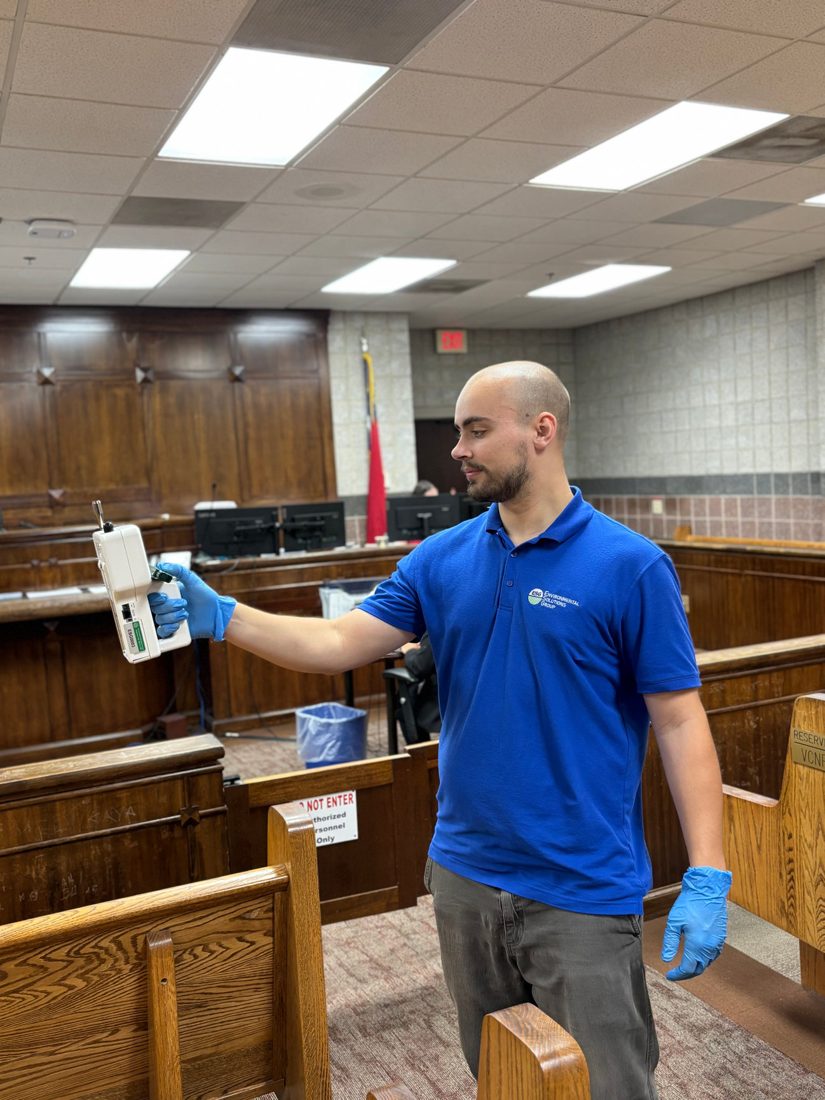
An ESG technician in a blue company polo holds an air sampling pump in a wood-paneled public courtroom.

The people who have to act on the answer

Richmond has an unusually high share of buildings that are complicated for reasons other than size: they are old, they are public, they are made of several buildings pretending to be one, or all three. Those properties need documentation more than they need opinions.

Government and public buildings

Facilities and operations staff whose findings will be read in public, budgeted against, and kept on file for years.

Universities and healthcare

Facilities, EHS, and risk leadership handling moisture events and occupant complaints in buildings that cannot close.

Historic and complex properties

Owners and stewards of buildings where the envelope, the mechanical systems, and the finishes each date from a different era.

Multi-building campuses

Organizations phasing evaluation and correction across several structures with a shared budget and separate conditions.

Commercial offices and multifamily

Owners and managers who need a defensible record of what was found, when, and under what conditions.

Large and estate homes

Owners, buyers, attorneys, and insurers dealing with hidden moisture, complex systems, or a large remediation proposal.

What ESG provides in this region

Each service below is summarized here and detailed on its own page. Purpose, the work performed, the deliverable, and how the information helps you decide.

Commercial & Large-Property Mold Assessment

Building-focused assessment written for properties where the mechanical systems and the envelope have been modified repeatedly over decades.

Purpose
Determine whether visible growth, moisture sources, or hidden concerns are affecting the property, and define practical next steps.
What ESG does
Building-focused visual assessment, moisture scanning, temperature and relative humidity readings, particle and IAQ screening as appropriate, targeted laboratory sampling, and photographs.
Deliverable
Written findings and practical recommendations. A detailed technical report or remediation protocol is a separate project-specific deliverable when project goals require it.
Why it helps
The owner or facility team learns what the evidence supports, what it does not, and which next step is worth the money.

Mold Assessment

Healthy Building / Indoor Air Quality Evaluation

For occupant complaints across a floor, a wing, or a building, where the answer lies in building conditions rather than in one sample.

Purpose
Evaluate building conditions and indoor air quality patterns instead of relying on a single measurement or a single sample.
What ESG does
Visual building review, moisture evaluation, and measurement of temperature, relative humidity, carbon dioxide, total volatile organic compounds, and particles, with targeted fungal, VOC, or allergen testing as needed.
Deliverable
A clear summary of findings, the conditions likely contributing to them, and recommended actions or further evaluation.
Why it helps
Occupant complaints get answered with building data rather than guesswork, and the response can be aimed at the actual contributing condition.
Healthy Building Assessment

Remediation Planning & Technical Protocol

Written objectives, containment considerations, documentation expectations, and PRV criteria, which is what a public owner needs before putting work out for pricing.

Purpose
Translate assessment findings into a clear project objective and written criteria for remediation and verification.
What ESG does
Review of project evidence, definition of the affected areas, and written cleaning and removal objectives, containment considerations, documentation expectations, and PRV criteria when appropriate.
Deliverable
A project-specific technical report and/or remediation protocol, prepared and reviewed by qualified ESG professionals.
Why it helps
Contractors bid against the same defined scope, so proposals can be compared on price and method instead of interpretation.
Assessment & Technical Reporting

Independent Scope Review & Remediation Project Support

Independent review of proposals and estimates, plus consultation as the project proceeds and discoveries change the scope.

Purpose
Help owners evaluate high-cost or complex remediation proposals and stay informed as the work proceeds.
What ESG does
Review of contractor scopes and estimates, comparison of proposals against the documented findings, attendance at meetings or site reviews, and clarification of project criteria as discoveries come up.
Deliverable
Written review comments, consultation, project records, or protocol updates as authorized. The contractor remains responsible for means, methods, worker safety, permits, and code compliance.
Why it helps
The owner has someone reading the scope who is not being paid to perform the work described in it.
Remediation Project Support

Post-Remediation Verification (PRV) / Clearance Testing

Independent verification of the defined remediation area against the project criteria, at the time of evaluation.

Purpose
Independently determine whether the defined remediation area meets the project acceptance criteria at the time of evaluation.
What ESG does
Visual cleanliness review, moisture and odor evaluation, particle screening, appropriate air and/or surface sampling, and review of the defined project criteria.
Deliverable
A written PRV determination or report identifying acceptable conditions or the corrective actions still needed.
Why it helps
Re-occupancy and final payment rest on an independent evaluation of the defined work area rather than on the remediator’s own sign-off.
Post-Remediation Verification

Ongoing IAQ Checkpoints / Indoor Air Wellness Program

Repeatable checkpoints and trend data for institutions that need a record over time rather than a single visit.

Purpose
Establish repeatable checkpoints and trend data for schools and commercial buildings instead of testing only after a complaint.
What ESG does
A representative sampling strategy, periodic fungal, carbon dioxide, and relative humidity measurements with optional particle, carbon monoxide, or TVOC readings, plus monitoring or seasonal baselines and staff consultation.
Deliverable
Recurring reports, trend interpretation, communication support, and a plan built around the organization.
Why it helps
Leadership can answer occupant questions from a record built over time rather than from a single visit.
Indoor Air Wellness Program

Facility Team Training & Communication Support

Instruction for maintenance and facilities teams, including how to describe testing and its limits to occupants and to the public.

Purpose
Give maintenance, facilities, management, and communication teams a common process for recognizing, documenting, escalating, and explaining mold and IAQ concerns.
What ESG does
On-site, classroom, virtual, or project-specific instruction covering moisture and mold recognition, IAQ fundamentals, documentation, PRV readiness, and how to communicate what testing can and cannot establish.
Deliverable
Customized training, workshop materials, handouts, and follow-up consultation for the organization.
Why it helps
Small moisture problems get caught and documented by staff before they turn into capital-expense problems.
Consultation & Training

LEED Indoor Air Quality Testing & Documentation

Independent IAQ testing and documentation for registered LEED projects, including LEED v4.1 projects.

Purpose
Provide independent testing and documentation for the project’s registered LEED rating system and its selected Indoor Air Quality Assessment pathway, including LEED v4.1 projects.
What ESG does
A project-specific sampling plan, environmental sample collection, accredited laboratory analysis, review of the required parameters and thresholds, and coordination with the LEED project team.
Deliverable
Testing records and reporting suitable for project submittal.
Why it helps
The credit documentation comes from an independent party, and the scope is confirmed against the registered rating system before testing begins.
LEED IAQ Testing

Why independent third-party involvement matters

ESG assesses, documents, interprets, recommends, and verifies. ESG does not perform remediation. That is a structural fact about the company, not a marketing position, and it is the reason the findings can be used by every party to a project.

When the company that evaluates a building is also the company that would be paid to correct it, every finding carries a commercial incentive. On a large or complex project that incentive is worth removing, both for the owner writing the check and for the contractor whose completed work will be judged by someone with nothing to gain from the verdict.

It also changes what the report is allowed to say. ESG documents conditions in the areas assessed at the time of evaluation, states the limitations of the work, and leaves health questions to a qualified medical provider.

No
remediation work performed by ESG
3rd
party to the owner and the contractor
2002
year ESG was founded, in Greensboro
1
defined remediation area per PRV determination

Five steps, in the order they actually happen

1

Define the question

ESG confirms the property, the concern, the project history, how the findings will be used, and the appropriate scope of work.

2

Evaluate the building

A qualified ESG professional observes conditions, collects measurements, and selects targeted samples or monitoring based on the project.

3

Interpret and document

ESG reviews the field and laboratory evidence and provides clear findings, the limitations of those findings, and practical next steps.

4

Support the decision

When authorized, ESG can prepare a protocol, review contractor scopes, attend project meetings, or clarify discoveries as the work proceeds.

5

Verify corrective work

After remediation, ESG can perform independent PRV of the defined work area using the applicable visual, moisture, odor, field, and laboratory criteria.

Where ESG works in Greater Richmond

Primary service geography

ESG serves projects in the City of Richmond and across Henrico, Chesterfield, and Hanover counties as routine coverage from its Greensboro headquarters.

Case-by-case coverage

Goochland, Powhatan, New Kent, and Charles City counties and the Town of Ashland are handled depending on the project. Ask when you call.

Communities served

Richmond Short Pump Glen Allen Midlothian Chester Mechanicsville Ashland Goochland Powhatan
Headquarters: 7 Maple Leaf Drive, Ste 104, Greensboro, NC 27410. 336-373-1538
ESG does not maintain a Richmond office. Greater Richmond projects are served from the company’s Greensboro headquarters.

Buildings with long histories and several owners of the answer

Greater Richmond’s institutional, government, and historic properties tend to share a pattern. The envelope is original, the mechanical systems are not, the finishes have been replaced more than once, and the record of what was done in between is incomplete. A moisture problem in that kind of building is rarely a single failure, and a single sample rarely explains it.

There is a second pattern that matters as much. In public and institutional work, the findings do not stop with the person who requested them. They get read by leadership, by counsel, by a board, sometimes by the public. That is an argument for documentation that states its own limits: what was assessed, in which areas, under what conditions, and what the evidence does not establish.

Historic buildings where the envelope, systems, and finishes each come from a different era
Government and public properties where the record will be read outside the facilities department
Multi-building campuses evaluated and corrected in phases against one budget
Occupied buildings where remediation has to be staged around continuing operations
Several people seated around a wooden table with notepads and documents during a project meeting.

Frequently asked

Can ESG assess a historic building without damaging finishes?

The assessment leads with non-destructive methods: visual review, moisture scanning, temperature and relative humidity, particle and IAQ screening, and photographs. Where the evidence points to a concealed condition, ESG identifies where further investigation is warranted and what it would involve, so the owner decides whether to open anything.

Our findings will be read by leadership and possibly by the public. How is the report written?

It states what was assessed and in which areas, what was measured and where, what the laboratory identified, and the conditions at the time of evaluation. It also states what the work does not establish. Reports written that way tend to hold up better outside the facilities department than reports that overreach.

We have several buildings and one budget. Can this be phased?

Yes. A common approach is a consistent evaluation across the buildings first, so conditions can be compared against each other, followed by protocol development and correction in priority order. Trend data through recurring checkpoints can then keep the record current between projects.

Can remediation happen in a building that stays occupied?

That is a project design question for the owner and the contractor, and containment considerations can be addressed in the written protocol. ESG’s role is defining the affected area and the criteria, then independently verifying the defined remediation area afterward. The contractor controls means, methods, worker safety, permits, and code compliance.

Does ESG make determinations about occupant health?

No. ESG documents environmental conditions in the areas assessed at the time of evaluation. Health questions belong with a qualified medical provider. Keeping that line clear is part of what makes the environmental documentation useful.

Is a written remediation protocol included in an assessment?

A standard mold assessment includes written findings and practical recommendations. A detailed technical report or a remediation protocol is a separate project-specific deliverable, prepared when the project goals call for defined criteria that contractors will bid and that verification will be measured against.

What stands behind the findings

Independent by structure

ESG assesses, documents, interprets, consults, and verifies. ESG does not perform remediation, so no finding is tied to selling the repair that follows it.

Accredited laboratory analysis

Samples are analyzed by accredited laboratories, and the reporting distinguishes real-time field screening from laboratory identification.

Calibrated field instruments

Moisture meters, particle counters, and IAQ instruments are maintained and calibrated, and the readings are recorded with the conditions at the time of evaluation.

Reviewed before it goes out

Findings are reviewed by qualified ESG professionals before the report is issued, and the limitations of the work are stated in the report itself.

ACAC accredited certification Indoor Air Quality Association member EPA lead-safe certified firm North Carolina Healthy Homes Specialist North Carolina energy and building program
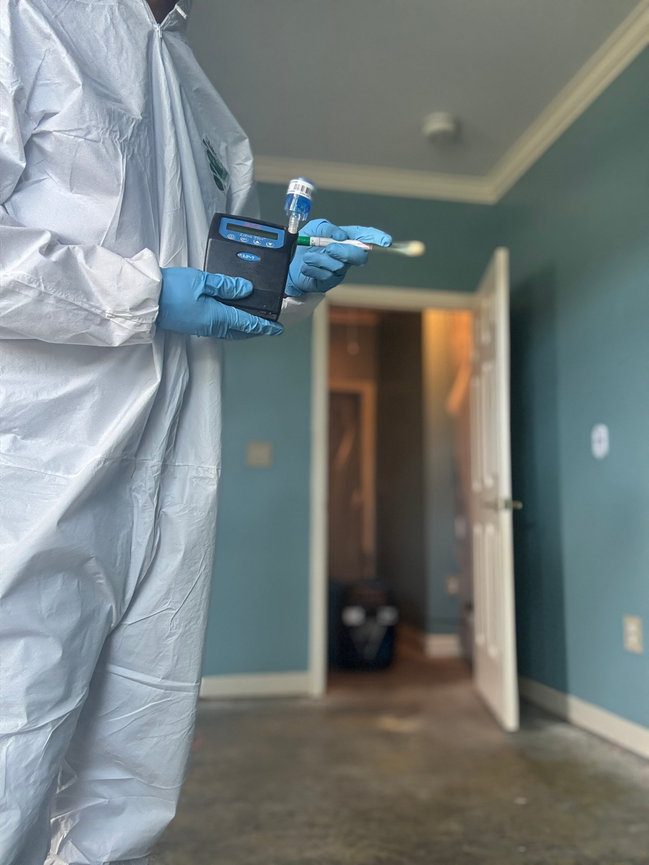
A technician in a white protective suit and gloves holds an air sampling pump in a stripped room during post-remediation verification.
Independent post-remediation verification of the defined work area, before containment comes down.

Discuss a Richmond-area property

Tell ESG about the building, its history, who will need to read the findings, and what decision is waiting on them. ESG will describe an appropriate scope and the documentation it produces.

336-373-1538 · environmental@go-esg.com · Greensboro, NC