Home/Service Areas/Wilmington & the Cape Fear Region
Cape Fear Region · New Hanover County

Mold, Moisture and Indoor Air Quality Services in Wilmington and the Cape Fear Region

Environmental Solutions Group provides independent mold, moisture, and indoor air quality evaluation for hospitality, condominium, institutional, and commercial buildings in the Cape Fear region, along with waterfront and large homes.

Coastal buildings raise moisture questions that inland buildings do not, which is a reason to evaluate them carefully rather than a reason to assume every property has a problem. ESG assesses conditions, documents what is measured, and can independently verify corrective work. ESG does not perform remediation.

Envelope, crawlspace, and humidity evaluationIndependent of any remediation contractorAccredited laboratory analysis

ESG does not maintain a Wilmington office. Cape Fear region projects are served from the company’s Greensboro headquarters.

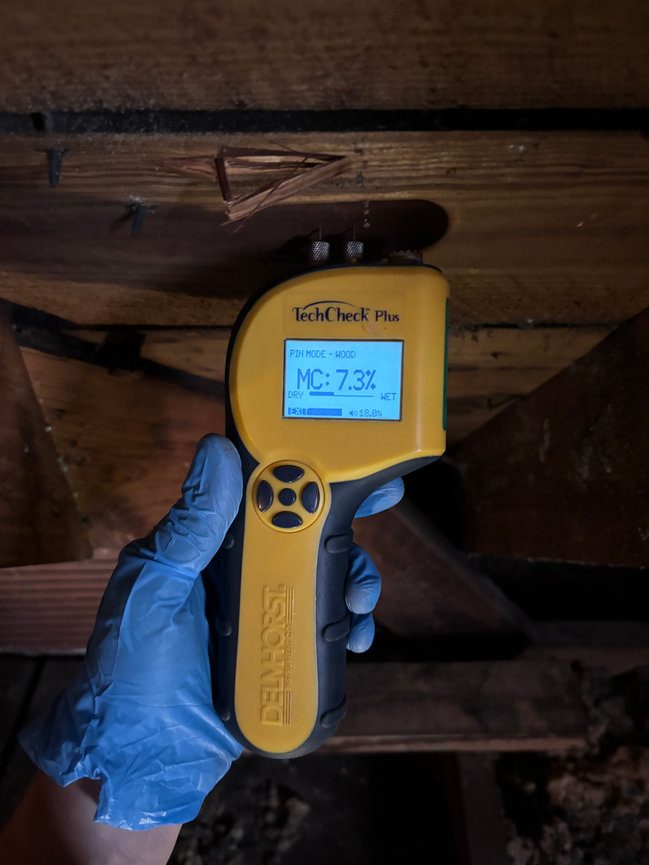
A gloved hand holds a pin-type moisture meter against wood framing in a dark under-floor space, showing a 7.3 percent moisture content reading.

The people who have to act on the answer

Coastal properties in the Cape Fear region change hands, change seasons, and change occupancy patterns more than most building stock. The questions ESG gets asked here follow those cycles.

Hospitality and lodging

Hotel and rental property operators handling guest complaints, odor reports, and seasonal shoulder periods when occupancy and conditioning both drop.

Condominiums and multifamily

Boards, associations, and managers who need documentation that distinguishes a unit-level issue from a building-envelope issue.

Commercial buildings and property management

Owners and managers dealing with tenant complaints, water intrusion, and the record that follows an insurance claim.

Schools and healthcare

Facilities teams working through moisture events and complaints in buildings that stay occupied.

New construction and builders

Construction and warranty teams evaluating framing, sheathing, and subfloor moisture before enclosure and before closing.

Waterfront and large homes

Owners, buyers, and insurers dealing with crawlspaces, envelope details, humidity control, and significant remediation estimates.

What ESG provides in this region

Each service below is summarized here and detailed on its own page. Purpose, the work performed, the deliverable, and how the information helps you decide.

Commercial & Large-Property Mold Assessment

Building-focused assessment that treats the envelope, the crawlspace, and the conditioning strategy as part of the investigation rather than as background.

Purpose
Determine whether visible growth, moisture sources, or hidden concerns are affecting the property, and define practical next steps.
What ESG does
Building-focused visual assessment, moisture scanning, temperature and relative humidity readings, particle and IAQ screening as appropriate, targeted laboratory sampling, and photographs.
Deliverable
Written findings and practical recommendations. A detailed technical report or remediation protocol is a separate project-specific deliverable when project goals require it.
Why it helps
The owner or facility team learns what the evidence supports, what it does not, and which next step is worth the money.
Mold Assessment

Healthy Building / Indoor Air Quality Evaluation

For humidity, odor, and comfort complaints where the relevant measurements are relative humidity, temperature, and building conditions over a period rather than a single grab sample.

Purpose
Evaluate building conditions and indoor air quality patterns instead of relying on a single measurement or a single sample.
What ESG does
Visual building review, moisture evaluation, and measurement of temperature, relative humidity, carbon dioxide, total volatile organic compounds, and particles, with targeted fungal, VOC, or allergen testing as needed.
Deliverable
A clear summary of findings, the conditions likely contributing to them, and recommended actions or further evaluation.
Why it helps
Occupant complaints get answered with building data rather than guesswork, and the response can be aimed at the actual contributing condition.
Healthy Building Assessment

Post-Remediation Verification (PRV) / Clearance Testing

Independent verification of the defined remediation area after storm or water-damage work, before containment comes down.

Purpose
Independently determine whether the defined remediation area meets the project acceptance criteria at the time of evaluation.
What ESG does
Visual cleanliness review, moisture and odor evaluation, particle screening, appropriate air and/or surface sampling, and review of the defined project criteria.
Deliverable
A written PRV determination or report identifying acceptable conditions or the corrective actions still needed.
Why it helps
Re-occupancy and final payment rest on an independent evaluation of the defined work area rather than on the remediator’s own sign-off.
Post-Remediation Verification

Independent Scope Review & Remediation Project Support

Post-storm remediation proposals arrive quickly and large. ESG can compare a scope against the documented findings before it is signed.

Purpose
Help owners evaluate high-cost or complex remediation proposals and stay informed as the work proceeds.
What ESG does
Review of contractor scopes and estimates, comparison of proposals against the documented findings, attendance at meetings or site reviews, and clarification of project criteria as discoveries come up.
Deliverable
Written review comments, consultation, project records, or protocol updates as authorized. The contractor remains responsible for means, methods, worker safety, permits, and code compliance.
Why it helps
The owner has someone reading the scope who is not being paid to perform the work described in it.
Remediation Project Support

Remediation Planning & Technical Protocol

Written objectives and criteria, which matters when a claim, an association, and a contractor are all attached to the same repair.

Purpose
Translate assessment findings into a clear project objective and written criteria for remediation and verification.
What ESG does
Review of project evidence, definition of the affected areas, and written cleaning and removal objectives, containment considerations, documentation expectations, and PRV criteria when appropriate.
Deliverable
A project-specific technical report and/or remediation protocol, prepared and reviewed by qualified ESG professionals.
Why it helps
Contractors bid against the same defined scope, so proposals can be compared on price and method instead of interpretation.
Assessment & Technical Reporting

New Construction Moisture & Mold Prevention

Staged moisture evaluation of framing, sheathing, and subfloor materials, which is worth more in a wet climate than in a dry one.

Purpose
Identify wet materials and fungal concerns before enclosure, finishes, or occupancy make correction more difficult.
What ESG does
Moisture readings, visual evaluation of framing, subflooring, sheathing, and other materials, targeted surface or air samples when warranted, and staged inspections through the build.
Deliverable
Objective construction records, findings, and recommended corrective actions.
Why it helps
A wet-framing question gets answered while the wall is still open, which is the cheapest moment it will ever be answered.
New Construction Testing

Ongoing IAQ Checkpoints / Indoor Air Wellness Program

Seasonal baselines and recurring checkpoints, useful for buildings whose occupancy and conditioning change across the year.

Purpose
Establish repeatable checkpoints and trend data for schools and commercial buildings instead of testing only after a complaint.
What ESG does
A representative sampling strategy, periodic fungal, carbon dioxide, and relative humidity measurements with optional particle, carbon monoxide, or TVOC readings, plus monitoring or seasonal baselines and staff consultation.
Deliverable
Recurring reports, trend interpretation, communication support, and a plan built around the organization.
Why it helps
Leadership can answer occupant questions from a record built over time rather than from a single visit.
Indoor Air Wellness Program

Why independent third-party involvement matters

ESG assesses, documents, interprets, recommends, and verifies. ESG does not perform remediation. That is a structural fact about the company, not a marketing position, and it is the reason the findings can be used by every party to a project.

When the company that evaluates a building is also the company that would be paid to correct it, every finding carries a commercial incentive. On a large or complex project that incentive is worth removing, both for the owner writing the check and for the contractor whose completed work will be judged by someone with nothing to gain from the verdict.

It also changes what the report is allowed to say. ESG documents conditions in the areas assessed at the time of evaluation, states the limitations of the work, and leaves health questions to a qualified medical provider.

No
remediation work performed by ESG
3rd
party to the owner and the contractor
2002
year ESG was founded, in Greensboro
1
defined remediation area per PRV determination

Five steps, in the order they actually happen

1

Define the question

ESG confirms the property, the concern, the project history, how the findings will be used, and the appropriate scope of work.

2

Evaluate the building

A qualified ESG professional observes conditions, collects measurements, and selects targeted samples or monitoring based on the project.

3

Interpret and document

ESG reviews the field and laboratory evidence and provides clear findings, the limitations of those findings, and practical next steps.

4

Support the decision

When authorized, ESG can prepare a protocol, review contractor scopes, attend project meetings, or clarify discoveries as the work proceeds.

5

Verify corrective work

After remediation, ESG can perform independent PRV of the defined work area using the applicable visual, moisture, odor, field, and laboratory criteria.

Where ESG works in the Cape Fear region

Primary service geography

ESG serves projects across New Hanover, Brunswick, and Pender counties as routine coverage from its Greensboro headquarters.

Case-by-case coverage

Columbus County is handled case by case depending on the project. Ask when you call.

Communities served

Wilmington Wrightsville Beach Carolina Beach Kure Beach Leland Southport Oak Island Hampstead Surf City
Headquarters: 7 Maple Leaf Drive, Ste 104, Greensboro, NC 27410. 336-373-1538
ESG does not maintain a Wilmington office. Cape Fear region projects are served from the company’s Greensboro headquarters.

Coastal moisture is a condition to measure, not a diagnosis

The Cape Fear region combines high ambient humidity, wind-driven rain, a real storm history, and a building stock heavy on crawlspaces, coastal envelopes, and seasonally occupied property. Those conditions make moisture worth evaluating carefully. They do not mean every coastal building has a mold problem, and ESG does not write pages that suggest otherwise.

What they do change is where an assessment looks. Crawlspace conditions, envelope details and wind-driven rain paths, conditioning strategy during low-occupancy periods, and the moisture content of the materials themselves usually carry more information here than an air sample taken in a conditioned room on a good day.

Crawlspace moisture, ground cover, and ventilation conditions under coastal homes and buildings
Envelope and wind-driven rain paths after a storm event, documented while the evidence is fresh
Seasonally occupied lodging and rentals where conditioning drops during shoulder periods
Condominium buildings where a unit complaint and a building-envelope condition have to be told apart
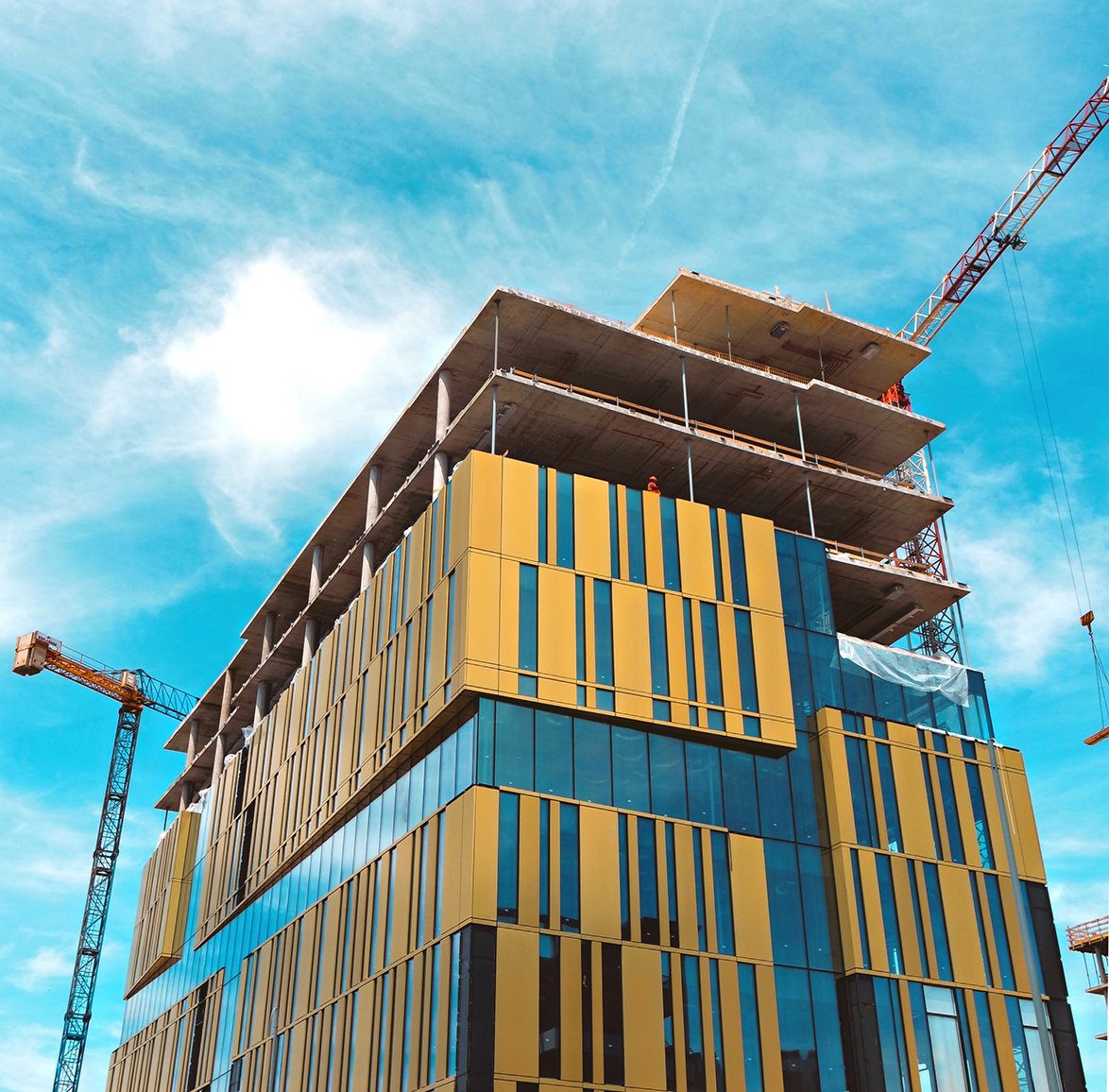
A multi-story building under construction with the exterior facade partly installed and tower cranes overhead.

Frequently asked

Does coastal humidity mean a building automatically has a mold problem?

No. Higher ambient humidity raises the importance of moisture control, drying, and conditioning, but it is a condition to measure rather than a conclusion. Plenty of coastal buildings measure normally. The purpose of an assessment is to establish what this building is actually doing, not what coastal buildings do generally.

After a storm or water intrusion, when should a building be evaluated?

Sooner is better, because moisture content in materials, the path the water took, and the conditions in the affected areas all change as the building dries or fails to dry. Early documentation is also what an insurance file and a remediation scope are built on later.

Our condo association has a complaint in one unit. Is that a unit problem or a building problem?

That is exactly the question an assessment is for. The evaluation looks at the unit and at the conditions around it, including envelope details, adjacent spaces, and moisture sources that are not confined to the unit, and the written findings state what the evidence supports on that point.

Do you look at crawlspaces?

Yes, and in this region they often carry more useful information than anything measured upstairs. Moisture content of framing and subfloor materials, ground cover, drainage, ventilation strategy, and the condition of insulation all inform what is happening in the living space above.

We operate lodging and get occasional odor complaints in the off season. What is the right scope?

Usually a Healthy Building / IAQ evaluation rather than a one-time sample, because the pattern is seasonal. Relative humidity and temperature during low-occupancy periods, conditioning strategy, and building conditions tend to explain shoulder-season odor complaints more often than a single air sample does.

Can the remediation contractor do the clearance testing?

They can, but it places the same party in charge of both the work and the judgment about whether it succeeded. Independent post-remediation verification of the defined remediation area removes that conflict, which matters more when an insurance claim or an association is attached to the outcome.

What stands behind the findings

Independent by structure

ESG assesses, documents, interprets, consults, and verifies. ESG does not perform remediation, so no finding is tied to selling the repair that follows it.

Accredited laboratory analysis

Samples are analyzed by accredited laboratories, and the reporting distinguishes real-time field screening from laboratory identification.

Calibrated field instruments

Moisture meters, particle counters, and IAQ instruments are maintained and calibrated, and the readings are recorded with the conditions at the time of evaluation.

Reviewed before it goes out

Findings are reviewed by qualified ESG professionals before the report is issued, and the limitations of the work are stated in the report itself.

ACAC accredited certification Indoor Air Quality Association member EPA lead-safe certified firm North Carolina Healthy Homes Specialist North Carolina energy and building program
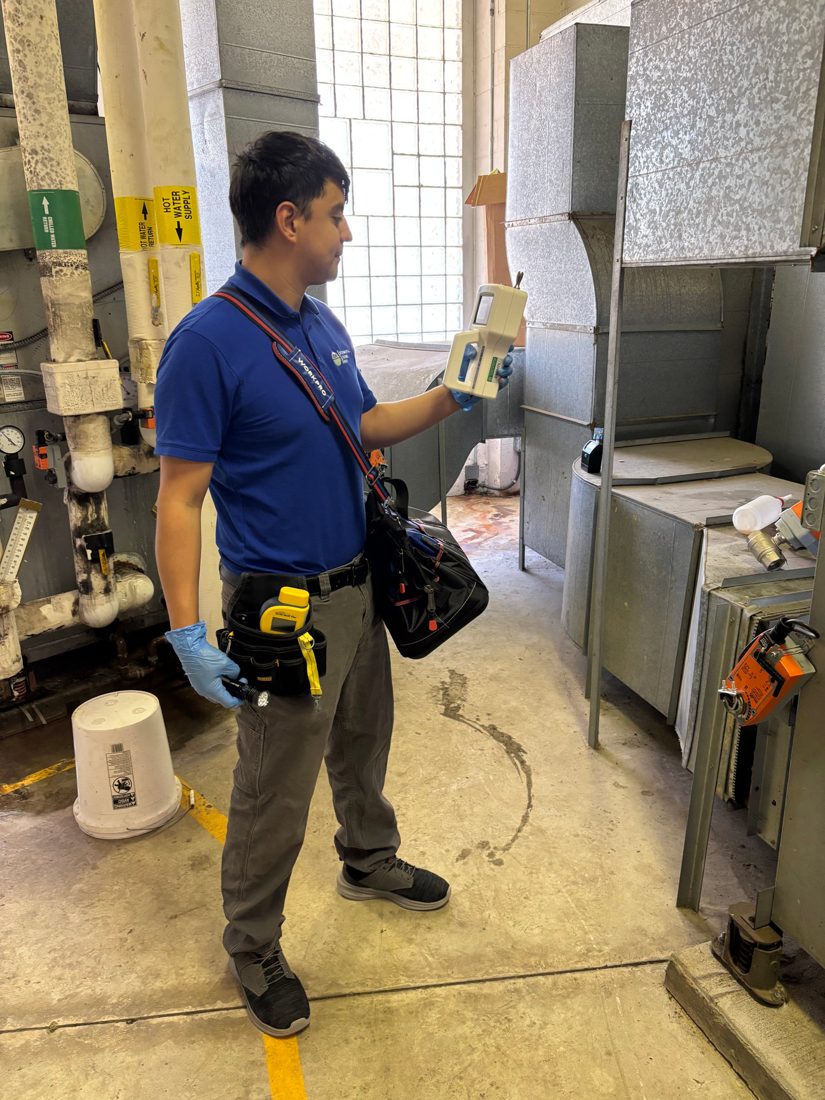
An ESG technician takes an instrument reading in a building mechanical room beside insulated piping and ductwork.
Field measurement in a building mechanical space, recorded with the conditions at the time of evaluation.

Discuss a Cape Fear region property

Tell ESG about the building, what has been observed, and whether a storm, a claim, or a transaction is attached to the timing. ESG will describe an appropriate scope.

336-373-1538 · environmental@go-esg.com · Greensboro, NC