Home/Service Areas/Martinsville-Henry County, VA
Martinsville · Henry County · Southern Virginia

Mold and Indoor Air Quality Services in Martinsville-Henry County, VA

Environmental Solutions Group provides independent mold, moisture, and indoor air quality assessment for schools, churches, public buildings, industrial facilities, and homes in Martinsville and Henry County.

Martinsville-Henry County has fewer independent environmental consultants than a metro market, which often means the only person offering an opinion about a building is the company hoping to be hired to fix it. ESG assesses, documents, interprets, and verifies. ESG does not perform remediation.

Independent of any remediation contractorGreensboro headquarters, roughly an hour awayAccredited laboratory analysis

ESG does not maintain a Martinsville office. Martinsville and Henry County projects are served from the company’s Greensboro headquarters.

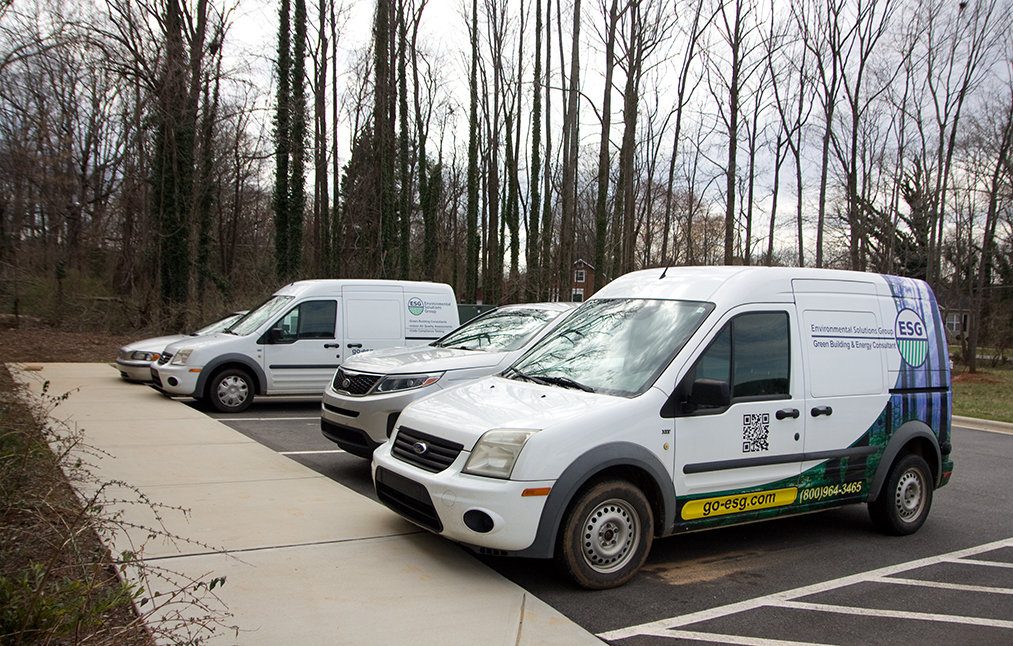
Two ESG-branded service vans parked outside the company office, marked with the ESG logo and go-esg.com.

The people who have to act on the answer

In a market this size, the same handful of people are responsible for most of the buildings that matter. ESG works with them directly rather than through layers.

Schools and school divisions

Maintenance and operations staff dealing with roof leaks, HVAC condensation, and classroom complaints in buildings that have to reopen on Monday.

Churches and religious campuses

Trustees, property committees, and volunteer facilities leads responsible for large mixed-age buildings that sit empty much of the week.

Municipal and public buildings

Town and county staff who need documentation that will hold up in a public meeting and in a budget request.

Manufacturing and industrial facilities

Plant and maintenance leadership dealing with humidity, process areas, roof and envelope leaks, and areas that cannot be shut down casually.

Commercial property and healthcare offices

Owners and managers handling tenant complaints, water damage, and the documentation that follows.

Homeowners

Owners facing a significant remediation estimate, a purchase decision, or a disagreement about what a contractor found.

What ESG provides in this region

Each service below is summarized here and detailed on its own page. Purpose, the work performed, the deliverable, and how the information helps you decide.

Commercial & Large-Property Mold Assessment

The core service here: a building-focused assessment that establishes what is actually happening before anyone prices a repair.

Purpose
Determine whether visible growth, moisture sources, or hidden concerns are affecting the property, and define practical next steps.
What ESG does
Building-focused visual assessment, moisture scanning, temperature and relative humidity readings, particle and IAQ screening as appropriate, targeted laboratory sampling, and photographs.
Deliverable
Written findings and practical recommendations. A detailed technical report or remediation protocol is a separate project-specific deliverable when project goals require it.
Why it helps
The owner or facility team learns what the evidence supports, what it does not, and which next step is worth the money.
Mold Assessment

Independent Scope Review & Remediation Project Support

Especially useful in a market with a small number of remediation contractors, where a second independent read on a large estimate is hard to come by.

Purpose
Help owners evaluate high-cost or complex remediation proposals and stay informed as the work proceeds.
What ESG does
Review of contractor scopes and estimates, comparison of proposals against the documented findings, attendance at meetings or site reviews, and clarification of project criteria as discoveries come up.
Deliverable
Written review comments, consultation, project records, or protocol updates as authorized. The contractor remains responsible for means, methods, worker safety, permits, and code compliance.
Why it helps
The owner has someone reading the scope who is not being paid to perform the work described in it.
Remediation Project Support

Post-Remediation Verification (PRV) / Clearance Testing

Independent verification of the defined remediation area, so the contractor who performed the work is not also the party judging it.

Purpose
Independently determine whether the defined remediation area meets the project acceptance criteria at the time of evaluation.
What ESG does
Visual cleanliness review, moisture and odor evaluation, particle screening, appropriate air and/or surface sampling, and review of the defined project criteria.
Deliverable
A written PRV determination or report identifying acceptable conditions or the corrective actions still needed.
Why it helps
Re-occupancy and final payment rest on an independent evaluation of the defined work area rather than on the remediator’s own sign-off.
Post-Remediation Verification

Healthy Building / Indoor Air Quality Evaluation

For buildings where the complaint is comfort, odor, or air quality generally, and no single sample would answer it.

Purpose
Evaluate building conditions and indoor air quality patterns instead of relying on a single measurement or a single sample.
What ESG does
Visual building review, moisture evaluation, and measurement of temperature, relative humidity, carbon dioxide, total volatile organic compounds, and particles, with targeted fungal, VOC, or allergen testing as needed.
Deliverable
A clear summary of findings, the conditions likely contributing to them, and recommended actions or further evaluation.
Why it helps
Occupant complaints get answered with building data rather than guesswork, and the response can be aimed at the actual contributing condition.
Healthy Building Assessment

Remediation Planning & Technical Protocol

Written objectives and criteria, which is what makes it possible to get comparable pricing from more than one contractor.

Purpose
Translate assessment findings into a clear project objective and written criteria for remediation and verification.
What ESG does
Review of project evidence, definition of the affected areas, and written cleaning and removal objectives, containment considerations, documentation expectations, and PRV criteria when appropriate.
Deliverable
A project-specific technical report and/or remediation protocol, prepared and reviewed by qualified ESG professionals.
Why it helps
Contractors bid against the same defined scope, so proposals can be compared on price and method instead of interpretation.
Assessment & Technical Reporting

Facility Team Training & Communication Support

Practical instruction for maintenance staff and property committees on recognizing, documenting, and escalating moisture concerns.

Purpose
Give maintenance, facilities, management, and communication teams a common process for recognizing, documenting, escalating, and explaining mold and IAQ concerns.
What ESG does
On-site, classroom, virtual, or project-specific instruction covering moisture and mold recognition, IAQ fundamentals, documentation, PRV readiness, and how to communicate what testing can and cannot establish.
Deliverable
Customized training, workshop materials, handouts, and follow-up consultation for the organization.
Why it helps
Small moisture problems get caught and documented by staff before they turn into capital-expense problems.
Consultation & Training

Ongoing IAQ Checkpoints / Indoor Air Wellness Program

Recurring checkpoints for schools and public buildings that would rather find the problem on a schedule than after a complaint.

Purpose
Establish repeatable checkpoints and trend data for schools and commercial buildings instead of testing only after a complaint.
What ESG does
A representative sampling strategy, periodic fungal, carbon dioxide, and relative humidity measurements with optional particle, carbon monoxide, or TVOC readings, plus monitoring or seasonal baselines and staff consultation.
Deliverable
Recurring reports, trend interpretation, communication support, and a plan built around the organization.
Why it helps
Leadership can answer occupant questions from a record built over time rather than from a single visit.
Indoor Air Wellness Program

Why independent third-party involvement matters

ESG assesses, documents, interprets, recommends, and verifies. ESG does not perform remediation. That is a structural fact about the company, not a marketing position, and it is the reason the findings can be used by every party to a project.

When the company that evaluates a building is also the company that would be paid to correct it, every finding carries a commercial incentive. On a large or complex project that incentive is worth removing, both for the owner writing the check and for the contractor whose completed work will be judged by someone with nothing to gain from the verdict.

It also changes what the report is allowed to say. ESG documents conditions in the areas assessed at the time of evaluation, states the limitations of the work, and leaves health questions to a qualified medical provider.

No
remediation work performed by ESG
3rd
party to the owner and the contractor
2002
year ESG was founded, in Greensboro
1
defined remediation area per PRV determination

Five steps, in the order they actually happen

1

Define the question

ESG confirms the property, the concern, the project history, how the findings will be used, and the appropriate scope of work.

2

Evaluate the building

A qualified ESG professional observes conditions, collects measurements, and selects targeted samples or monitoring based on the project.

3

Interpret and document

ESG reviews the field and laboratory evidence and provides clear findings, the limitations of those findings, and practical next steps.

4

Support the decision

When authorized, ESG can prepare a protocol, review contractor scopes, attend project meetings, or clarify discoveries as the work proceeds.

5

Verify corrective work

After remediation, ESG can perform independent PRV of the defined work area using the applicable visual, moisture, odor, field, and laboratory criteria.

Where ESG works in Martinsville-Henry County

Primary service geography

ESG serves projects in the City of Martinsville and throughout Henry County as routine coverage from its Greensboro headquarters.

Case-by-case coverage

Patrick and Pittsylvania counties are taken on when the project size and travel support the assignment. It is worth asking, and ESG will say plainly if a project is not a good fit for the distance.

Communities served

Martinsville Collinsville Bassett Fieldale Ridgeway Stanleytown Axton Stuart
Headquarters: 7 Maple Leaf Drive, Ste 104, Greensboro, NC 27410. 336-373-1538
ESG does not maintain a Martinsville office. Martinsville and Henry County projects are served from the company’s Greensboro headquarters.

Large-project expertise in a market that does not have much of it locally

Martinsville-Henry County has substantial buildings: school facilities, church campuses, municipal properties, and industrial plants, several of them older, large, and unevenly occupied. What the market has less of is independent environmental consulting. When a moisture problem appears, the practical choice is often between accepting the assessment of the company that wants the remediation contract, or doing nothing.

That is the gap ESG fills here. The same assessment approach used on commercial and institutional projects elsewhere applies to a Henry County school building or a Martinsville church, and the travel is manageable: the Greensboro headquarters is roughly an hour away. ESG would rather do this well in a focused area than claim coverage of all of Southside Virginia.

Church campuses with intermittent occupancy, mixed-age wings, and childcare or school spaces
School buildings where the assessment has to fit around an academic calendar
Manufacturing and industrial space with humidity, process, and envelope questions
Property owners who have one remediation estimate and no independent read on it
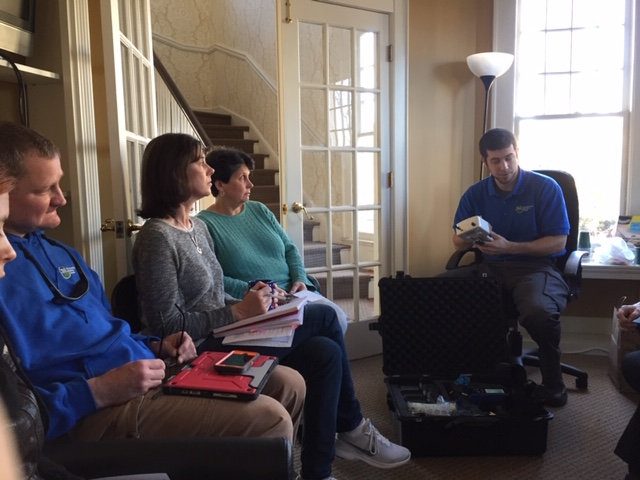
An ESG staff member seated with instrument cases open, showing testing equipment to a small group of people taking notes.

Frequently asked

Is Martinsville too far for ESG to work?

No. ESG’s headquarters is in Greensboro, roughly an hour from Martinsville, and Martinsville-Henry County is named as routine coverage rather than an exception. What is worth discussing on the call is the project scope, because travel is easier to justify on a building assessment than on a single sample.

Is there a minimum project size?

Ask when you call. ESG is set up for commercial, institutional, and larger residential work, and the honest answer for a small single-room question may be that the travel does not serve you well. That conversation is better had before scheduling than after.

We have one remediation estimate and nothing to compare it to. Can ESG help?

Yes, and this is one of the more useful things ESG does in this market. ESG can assess the building independently, document what the evidence supports, and review the contractor’s scope and estimate against those findings in writing. ESG does not perform remediation, so the review is not a competing bid.

Can ESG assess a church or school building?

Yes. Both are priority building types here. Large mixed-age buildings with intermittent occupancy, older roofs and plumbing, and childcare or classroom spaces are exactly the situations where a building-focused assessment beats a single sample.

Will ESG work with the remediation contractor we already have?

Yes. ESG can prepare a written protocol defining the work area and criteria, review the contractor’s scope, and perform independent post-remediation verification afterward. The contractor remains responsible for means, methods, worker safety, permits, and code compliance.

What if the assessment finds that there is no significant problem?

Then the report says that, and it is a real result. Documenting that the evidence does not support a suspected condition is often what a property committee or a school board actually needs before it can close the question and move on.

What stands behind the findings

Independent by structure

ESG assesses, documents, interprets, consults, and verifies. ESG does not perform remediation, so no finding is tied to selling the repair that follows it.

Accredited laboratory analysis

Samples are analyzed by accredited laboratories, and the reporting distinguishes real-time field screening from laboratory identification.

Calibrated field instruments

Moisture meters, particle counters, and IAQ instruments are maintained and calibrated, and the readings are recorded with the conditions at the time of evaluation.

Reviewed before it goes out

Findings are reviewed by qualified ESG professionals before the report is issued, and the limitations of the work are stated in the report itself.

ACAC accredited certification Indoor Air Quality Association member EPA lead-safe certified firm North Carolina Healthy Homes Specialist North Carolina energy and building program
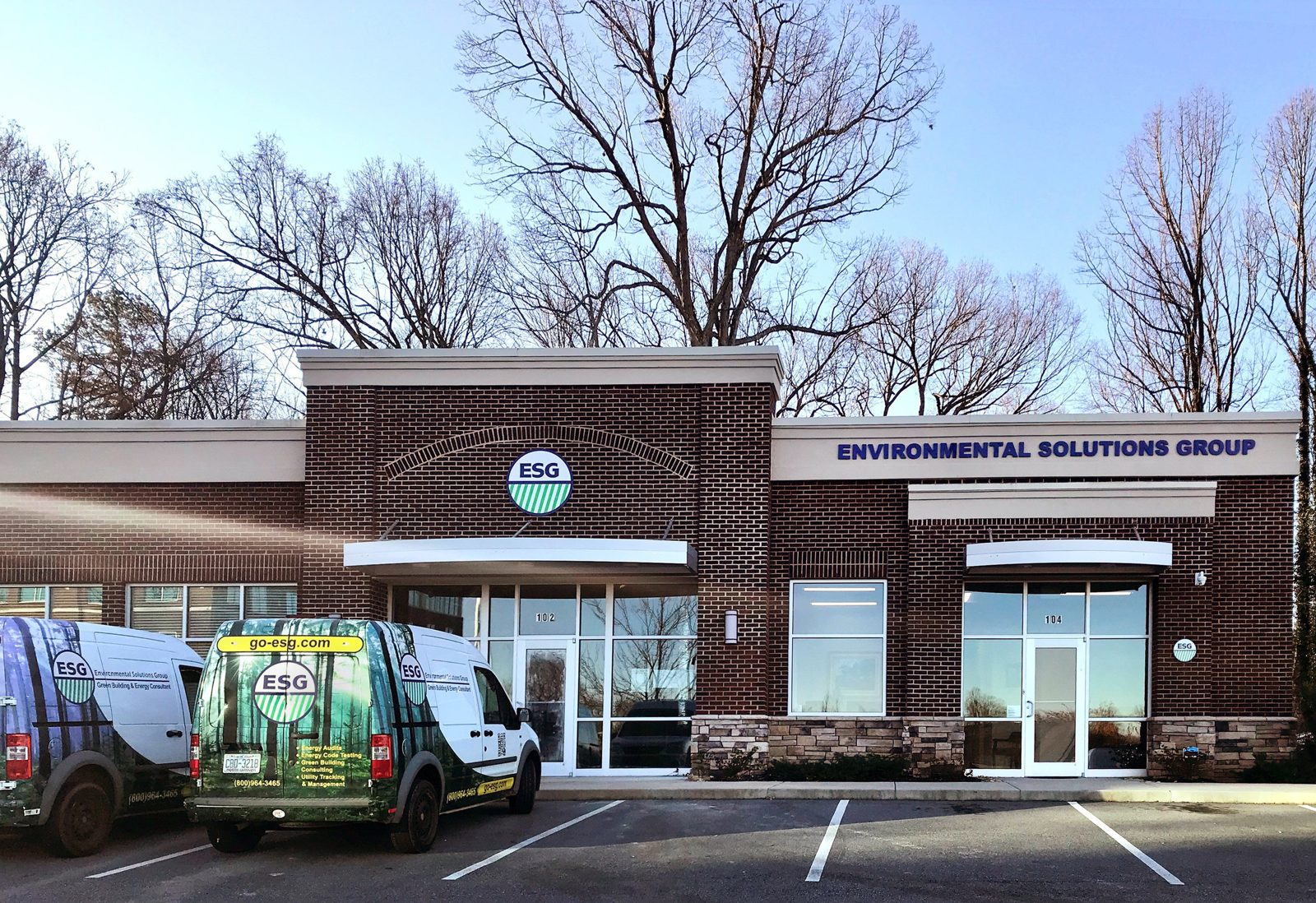
The brick exterior of the Environmental Solutions Group office in Greensboro, NC, with signage and two branded vans parked in front.
ESG headquarters in Greensboro, NC. Martinsville-Henry County projects are served from here.

Talk about a Martinsville or Henry County building

Describe the building, what has been observed, and what decision is waiting on the answer. ESG will tell you what an appropriate scope looks like, and will say so if the project is not a good fit.

336-373-1538 · environmental@go-esg.com · Greensboro, NC